
The triathlete's swim problem is almost never the swim. It is arriving at the bike with legs that still work.
That one difference changes what good freestyle means for you. A pool swimmer can empty the tank in the last twenty five yards because nothing comes after the wall. You have two more sports waiting, so the stroke you want is the same freestyle with its priorities reordered. Sixteen years of racing taught me where speed is cheap and where it is expensive. The cheap speed sits in body position and stroke length. The expensive speed sits in the legs, and the legs are exactly what you need later.
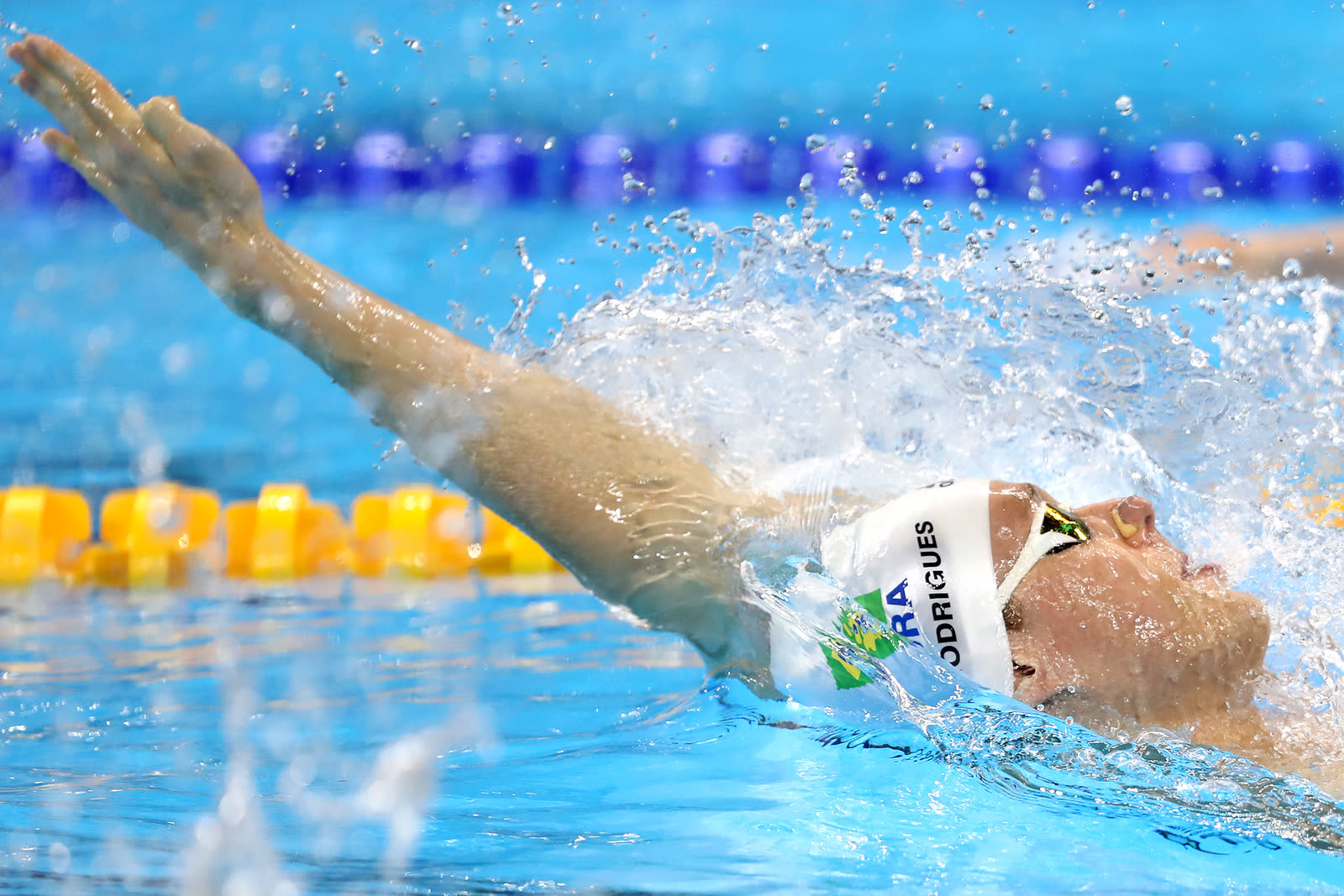
What is the best swim technique for triathlon?
Freestyle with three priorities in this order: a flat, long body position, the longest stroke you can hold, and a kick small enough to cost almost nothing.
Body position comes first because it is the biggest single lever in the stroke. U.S. Masters Swimming is unambiguous in its freestyle body position guide: "Maintaining a great body position is the most important skill for swimming freestyle fast." The target it sets is easy to picture: "Everything needs to be as straight as possible from head to toe, minimizing any drag."
Drag is a tax on every stroke of a twenty minute swim. Lift the head to look forward and the hips drop, so each stroke drags a bigger wall of water for the same speed and the legs pay for it. If your legs ride low, start with why your legs sink when you swim.
Rotation is the other half of position. The same guide says "Rotation is critical for effective freestyle because it allows your arms to function optimally," with a self test worth keeping: "If you're unable to recover your arms smoothly over the surface, you need to rotate more." It also sets a limit: "Rotation only works if you keep your spine relatively straight." More in freestyle body rotation.
Why should a triathlete swim with a two-beat kick?
Because it is the cheapest kick there is, and cheap is the whole point. In kick timing 101, U.S. Masters Swimming describes a swimmer who "takes only a single kick per arm stroke or two kicks per stroke cycle," then says plainly: "This is the most economical kick and it's most similar to walking or running on land."
It also names who uses it: "The two-beat kick is often used for long distance events." Your swim leg is a long distance event wearing a different name. The article notes that "The four- and six-beat kick can be used for virtually any distance," but a bigger kick burns more of the oxygen you are already rationing, in the muscles you want fresh on the bike.
There is a catch, and the article names it: this pattern "requires the most balance of the three patterns." A two-beat kick only holds together once the body position above is good, because it is no longer propping your legs up. That is why it sits third and not first.
To find it, swim a length placing one downward kick against each arm pull, the kick landing as the opposite hand presses back. It feels empty at first. Legs long, ankle loose, feet inside the body line. More on kick size in how to kick in freestyle.
How do you get more distance out of each freestyle stroke?
By finishing the stroke you already start, rather than reaching further out in front. Most adults lose their distance at the back of the pull.
The U.S. Masters Swimming freestyle pull guide puts a useful meaning on stroke counting: "a lower stroke count implies that you're moving more water backward with each pull." A low count is evidence of better purchase on the water, not a target you hit by gliding.
On the finish it says "Pushing all the way back to the finish of your stroke can provide additional propulsion to each stroke," with the hands finishing "just past your hips." It is honest that little surface area is still pushing backward by then, and adds that if "you typically exit too soon, you'll want to feel like you're extending your pull." Many triathletes exit around the ribs because the next breath pulls them around early. More in finishing the freestyle stroke past the hip.
Should triathletes breathe to both sides?
At minimum you should be able to. The U.S. Masters Swimming breathing guide does not make it compulsory: "Some swimmers prefer breathing only to one side, and others prefer breathing bilaterally (to both sides)." Either can work.
It does insist on practising the weak side anyway. For a one sided breather it says "there is still value in occasionally breathing to the opposite side during workouts to create symmetry in your stroke."
Symmetry is why I push this for triathletes. A stroke that only ever rotates far to one side pulls harder on that side, and a stroke that pulls harder on one side does not track straight.
The same guide ties frequency to the length of the effort: beyond about seventy five seconds, "breathing every other or every third stroke will ensure that you get the air you need." Your swim is far longer than that, so take the air. The detail is in bilateral breathing in freestyle.
How will SwimRead read these three things in your freestyle?
The app isn't out yet. When it launches, it will read the side view, where position, stroke length and kick size all show up at once. The SwimRead home page states that "At launch, the app will analyze freestyle filmed from the side of the pool," and that you "Record a short freestyle video, keep each swimmer's history together, and choose a focus to take into your next practice."
The filming ask is small. The page says to "Aim for 10 seconds of continuous freestyle" and to "Film in landscape from the side, with the whole body visible, a stable camera, standard lens, and normal playback speed," adding that "You do not need a full pool length." From there, "On-device pose detection estimates up to 33 body landmarks in sampled video frames."
It is careful about what that is worth, and so am I. The page says "These estimates are not validated technique grades," and that "The app does not grade technique or automatically retrain itself after each analysis." What the first version will give you it states directly: it "will show measurement availability, swimmer history, and a chosen training focus." The focus is yours to set, shown with "Head position" as an example and labelled "Your choice, not a detected technique problem." Pick one of the three priorities above, then "Return to that swimmer's history for your next recording, using comparable filming conditions."
What should you take to the pool this week?
- 4 x 50 easy, head low and body long. One goggle in the water on the breath, face down before the recovering hand lands.
- 4 x 25 counting strokes. Learn your baseline before chasing a lower number.
- 4 x 25 finishing past the hips. Feel the hand leave the water behind the hip, not beside the ribs.
- 4 x 25 hunting the two-beat kick. One downward kick per arm pull, feet inside the body line.
- 2 x 50 breathing to the weak side only. Expect it to feel clumsy. That is the point.
- One repeat test a month apart. Same distance, rest and pool, with the times in my free swim pace calculator.
The SwimRead app isn't out yet. If you want help with your stroke today, take the 60-second swim check.