
Most adult swimmers I watch have a better catch than they think and a worse finish than they would believe. The front half gets all the attention, because that is what every article and video talks about. The back half, where the hand travels from under your chest to behind your hip, is usually where the stroke quietly gives up.
It shows up as swimming that looks busy and goes nowhere. The hand goes in, the arm sets up, and somewhere around the belly button the stroke loses interest and heads for the surface.
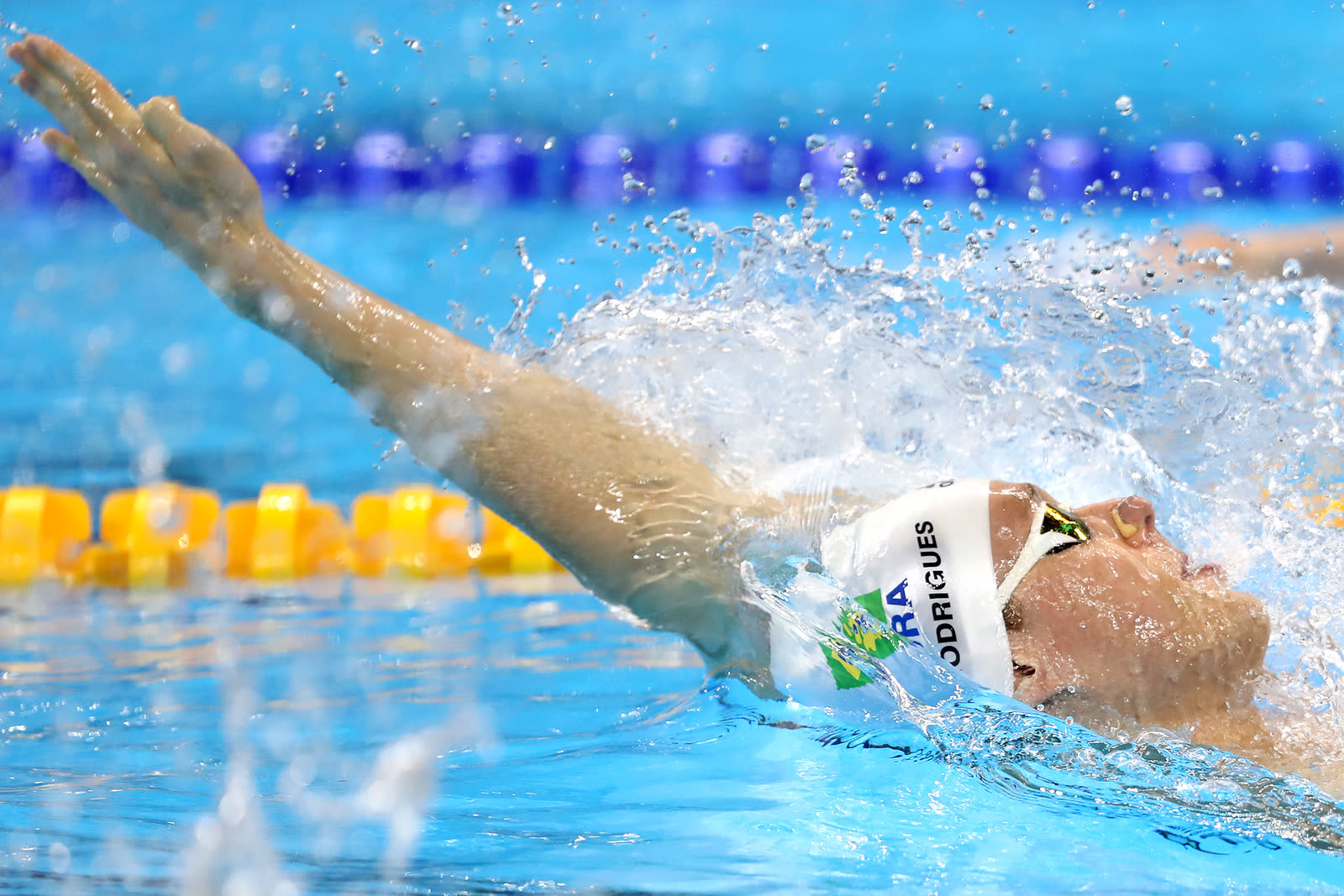
What is the push phase in freestyle?
The push phase is the last part of the underwater stroke, from the moment your hand passes under your shoulder until it leaves the water behind your hip.
The underwater arm has two jobs. First it anchors the water and holds it, which is the catch and the pull. Then it accelerates past that anchor and sends it backwards, which is the push. The elbow, bent and high through the pull, straightens as the hand moves back, and the palm keeps facing where you came from. The hand should be moving faster at the end of the push than anywhere else underwater.
That second half is not a formality. In a three dimensional study of 200m front crawl, the entry and push phases came out as the fastest and propulsive phases of the stroke cycle, while the recovery of each arm was mostly resistive for the whole body.
Where should your hand finish in the freestyle stroke?
Your hand should leave the water behind the line of your hip, with the arm close to straight and the thumb brushing past your upper thigh.
Not at the hip. Past it. On deck, drop your arm by your side and reach back as if to touch the wall behind you: the hand ends up slightly further back than hanging straight down, and that is the shape you want at exit. In the water you are rolled, so the finish happens at an angle, but the landmark holds.
Two things end the push properly. The hand accelerates all the way out, and the body is already rolling to the other side as it leaves, so the exit feels like the shoulder lifting away from the hand rather than the hand lifting out of the water.
Why do swimmers quit the stroke before the hip?
Most short finishes are a breathing habit or a rotation problem, not a strength problem.
- You are in a hurry. Swimmers who feel slow turn the arms over faster, and the easiest place to save time is the end of the stroke, because that is the part you cannot see. The stroke gets shorter, the rate gets higher, the pace stays flat.
- You stop rotating. The finish needs the torso to keep turning. If your hips and chest lock flat, the arm runs out of room and bails out early. The same flat body that ruins a high elbow recovery cuts the push short at the other end.
- You are breathing. Lifting the head pulls the hips down and stalls the roll, so the stroke on the breathing side is usually the shortest of the length. The piece on the scissor kick when breathing shares the same root cause.
- You were taught an S shape. Sweeping the hand out towards the hip sends it sideways instead of backwards.
What does a short finish cost you?
It costs you distance per stroke, and you pay for it with a higher stroke rate, which is why it hides so well.
Exiting at the belly button instead of behind the hip throws away the part of the stroke where the hand travels fastest. A study of maximal effort front crawl found power peaking twice in the underwater stroke, once in the pull and again in the push, with average power across the stroke strongly correlated to swimming speed. Cutting the second peak off removes one of the two places the stroke does its work.
That same study reported that during the push phase thoracic rotation, shoulder adduction and elbow extension contributed about equally to the power produced. It matches what you see from the deck: a finish is not an arm thing. It is a torso turning, a shoulder closing towards the body and an elbow straightening, all arriving together. To see the cost in numbers, count strokes per length across a few 50s and run the times through the pace calculator. A stroke count that climbs while your time stays flat is a stroke being thrown away at the back.
How does SwimRead read the end of your stroke?
The end of the stroke is only visible from the side, and the side of the pool is exactly where SwimRead asks you to film.
Its home page says that "The current beta analyzes freestyle filmed from the side of the pool", and asks you to "Film in landscape from the side, with the whole body visible, a stable camera, standard lens, and normal playback speed", aiming for "10 seconds of continuous freestyle". Swim a real length rather than a drill, so the finish in the video is the finish you actually use. The page describes the analysis as on device pose detection that "estimates up to 33 body landmarks in sampled video frames", and states "Video stays on your phone. Technical measurements are sent to improve the analysis."
Be clear about what you get. The page says that "The beta does not assign a technique grade or claim validated biomechanical accuracy." What it offers is the loop a swimmer without a coach never gets: "Record a short freestyle video, keep each swimmer's history together, and choose a focus to take into your next practice." Film the same 10 seconds this week and again in a month, with the finish as your focus, and the question stops being whether your stroke reaches past the hip and becomes whether it reaches further than before.
Which drills teach you to finish the stroke?
Work the exit landmark and the roll, because telling yourself to push harder does nothing.
- Thigh tap. On every stroke, let the thumb brush your thigh before the hand leaves the water. It gives the finish a landmark instead of a feeling.
- Single arm freestyle, idle arm at your side. With nothing to rush towards, the working arm has time to complete the push, and you feel how much of it comes from the body turning.
- Dog scull in the back third. Scull only from chest to hip, palms facing backwards. It teaches the direction the hand should travel at the end.
- Fist freestyle. Closed fists make a lazy finish obvious, because without the palm you can only move water by sending the forearm backwards.
Use these in short doses inside a normal set, not as a separate drill day, so the feeling goes straight into full stroke swimming while it is fresh. Then watch your breathing side late in a hard set, because fatigue shortens the back of the stroke before it touches anything else. If you hold on to one thing in the last 100, hold the thumb past the thigh.
--
A short finish is close to invisible from inside the water. You can feel a dropped elbow. You cannot feel a stroke that stopped two inches early, over and over, for a thousand metres. That gap between what you swim and what you think you swim is the reason I built this. SwimRead's home page states that "SwimRead is free while in beta." If you would rather see where your stroke actually ends than guess, join the beta.