
Most freestyle swimmers are not held back by fitness. They are held back by two or three habits repeated thousands of times a week, so consistently that the stroke stops feeling like a mistake at all. It just feels like swimming. I have watched this pattern for sixteen years, in myself and in every level of swimmer I have coached, and it is almost always the same handful of faults. Here are the seven I see most, the mechanics behind each one, and what actually fixes them.
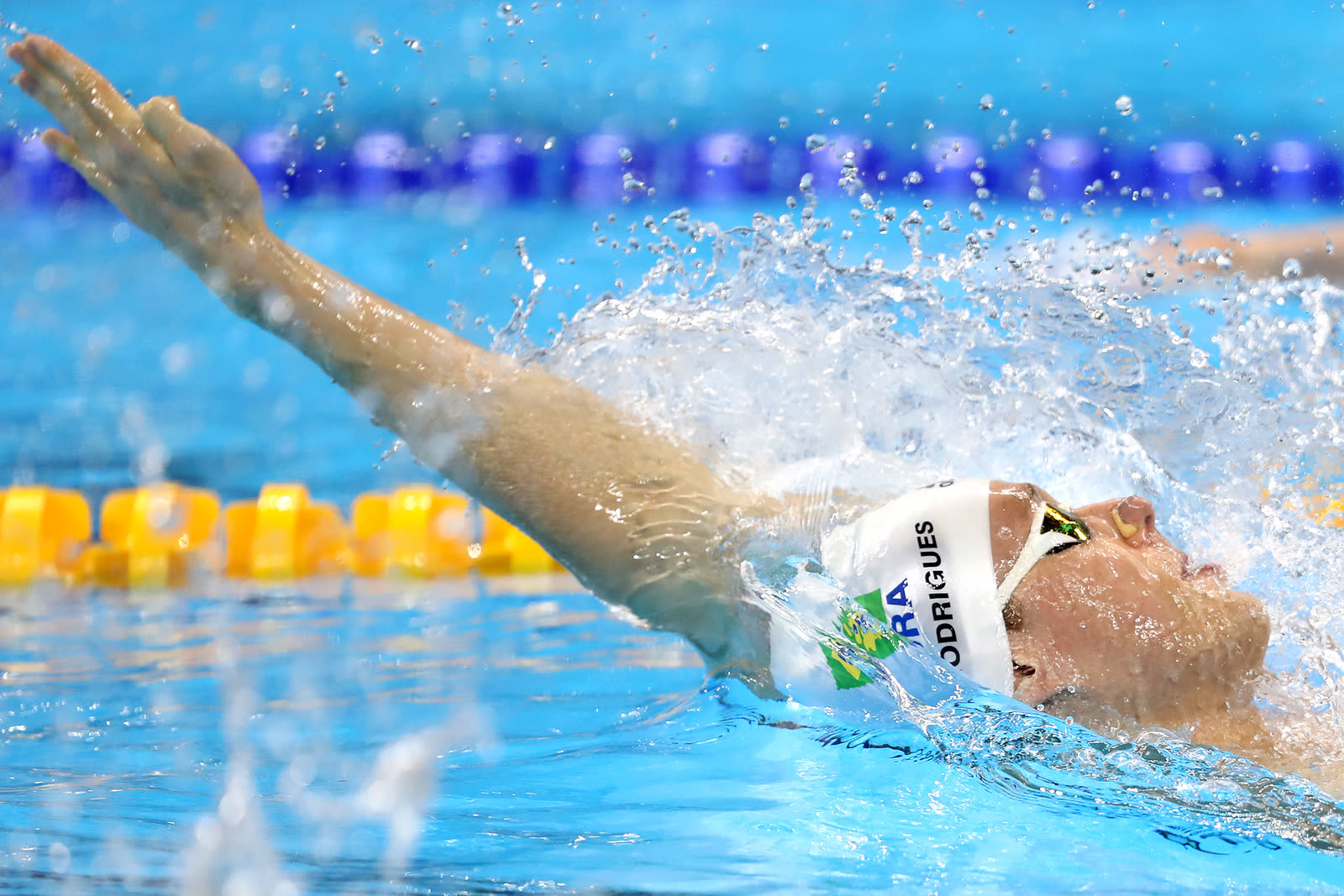
Why does my arm slip through the water instead of gripping it?
Your elbow is dropping before your hand catches the water, so the forearm never turns into a paddle. This is the single most common fault I see at every level, from first-year adults to national team swimmers on a bad day. The hand enters, the elbow sinks toward the bottom of the pool, and the arm sweeps back nearly straight, stirring the water instead of holding it. It feels fast because the arm is moving quickly, and that speed gets mistaken for power. It is the opposite. I wrote a full breakdown of the freestyle catch and the drills I trust to fix a dropped elbow, because this one fault alone accounts for more lost speed than any other on this list.
Why do my legs sink when I try to swim freestyle?
Sinking legs are almost never a leg problem. They come from where your head sits, how far your lead arm reaches, or how little your body rotates, all of which tip your hips down and drag your legs with them. Swimmers respond by kicking harder, which burns energy without fixing the actual cause. I cover the six specific causes and their corrections in a dedicated piece on why legs sink in freestyle, because the fix is different depending on which one applies to you.
Why does my stroke feel like a fight instead of a rhythm?
You are probably swimming flat, rotating from the shoulders instead of the hips, or not rotating at all. Freestyle is not a flat stroke performed with two arms taking turns. It is a stroke swum on alternating sides, with the hips and shoulders rotating together around a stable spine so each arm gets a longer, more powerful pull and the recovery arm swings through with almost no effort. Swim it flat and every stroke has to fight the water head on. I break down how to build that rotation without overdoing it in freestyle body rotation.
Why do I feel like I am gasping for air by the end of a length?
You are probably holding your breath through most of the stroke and trying to both empty your lungs and inhale in the brief window your face is out of the water. That is not enough time to do both. The fix is to exhale continuously and steadily while your face is in the water, so that by the time you rotate to breathe, all you have to do is inhale. It sounds simple and it changes everything once it becomes automatic. I go through the full progression, including how to work toward bilateral breathing without it wrecking your pace, in how to breathe in freestyle.
Why does my hand cross the center line when it enters the water?
A crossover entry happens when your hand reaches in and lands on the other side of an imaginary line running down the middle of your body, instead of in line with your shoulder. From the inside it barely registers, a few centimeters feels like nothing. In the water it forces your body to snake side to side to compensate, which adds drag on every single stroke and throws off your rotation timing. I cover entry width, trajectory, and the drills that retrain it in freestyle hand entry.
Why does my kick feel heavy instead of helping me move forward?
Most amateur kicks are driven from the knee, which creates a big, splashy motion that generates drag without much forward push. A propulsive freestyle kick starts at the hip, stays compact, and lets a relaxed, flexible ankle do the whipping action at the bottom. A stiff ankle or a knee-driven kick turns your legs into a brake instead of an engine. I lay out the difference between a 2-beat and 6-beat kick and the ankle flexibility work that unlocks it in how to kick in freestyle.
Why do I go slower the harder I try?
This is usually not one fault but several of the ones above compounding under effort. When swimmers try to go faster, the instinct is to pull harder and turn the arms over faster, which shortens the stroke, drops the elbow earlier, and flattens the rotation, all at once. Speed in freestyle comes from holding your technique together under fatigue, not from abandoning it the moment the pace gets hard. That is why testing yourself against the clock matters more than testing yourself against how a stroke feels. My free swim pace calculator turns a simple time trial into training paces, so you can see whether a technical change is actually making you faster rather than just feeling different.
What should you actually work on first?
Start with the catch. Everything downstream, your rotation, your kick timing, even your breathing rhythm, is built around the rhythm of your pull. Fix a dropped elbow first and the rest of the stroke tends to organize itself around it far more easily than if you chase all seven faults at once.
A practical way to work through this list:
- Film one length of easy freestyle from the side and one from underwater, if you can, before you change anything
- Watch for a dropped elbow first, since it affects the most downstream faults
- Check hip rotation next, since a flat stroke will sabotage a good catch anyway
- Address breathing rhythm and hand entry once the first two feel more automatic
- Retest against the pace calculator, not against how the stroke feels, since feel is the least reliable measure of change
SwimRead is a swimming video review app, currently in beta. It supports short, side-view freestyle recordings, shows which automatic measurements are available, and keeps a history and chosen training focus for each swimmer. It does not grade technique or establish that a specific error was detected. Video stays on the phone; technical measurements and body-landmark coordinates are sent as described in the Privacy Policy. Join the beta waitlist for an invitation as places open.