
You know the feeling. You pull harder, your heart rate climbs, and the pace clock does not care. Your hand rips through the water, bubbles everywhere, and the wall is not arriving any faster. Coaches call it slipping: the arm moves, but the body does not.
Here is the uncomfortable truth I learned over sixteen years of high performance swimming: the biggest leak in most strokes is not fitness. It is the catch, the first half second of the underwater stroke. I spent entire seasons working on mine, because getting it wrong compromises everything that follows.
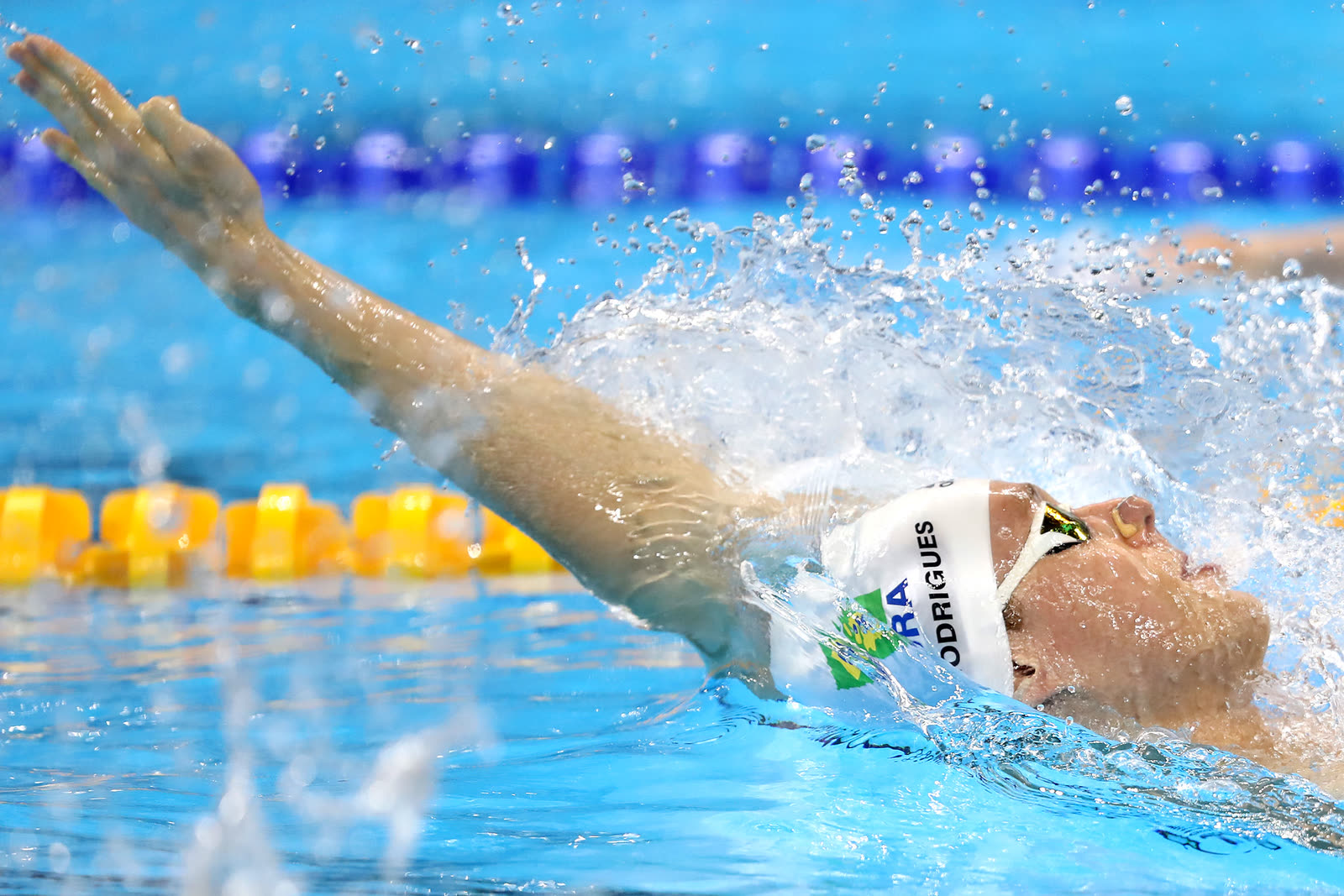
What does the catch phase do in freestyle?
The catch turns your hand and forearm into one large paddle that faces backward, and that is its only job. It is the phase between your hand entering the water and the start of the real pressing action of the pull.
The physics is blunt. You move forward by pushing water back. Press water down and you lift your front end instead of moving it. Sweep water out to the side and you snake. Only backward pressure becomes forward speed.
This is where the phrase early vertical forearm comes from, usually shortened to EVF. After your hand enters and extends, you bend at the elbow while the elbow itself stays high, close to the surface. Your fingertips tip down toward the bottom of the pool and the forearm rotates toward vertical. Do this early, out in front of your head rather than under your chest, and you double your paddle: hand plus forearm pressing water back together. U.S. Masters Swimming teaches the same principle: the elbow position is what separates a stroke that holds water from one that stirs it.
There is a number I coach around. I use a reference elbow bend of roughly 100 degrees through the catch and into the mid pull as a coaching cue, not an automated technique grade. Bend much less and the arm stays straight, pressing down on the water. Bend much more and you shorten the stroke and give up leverage.
What is a dropped elbow in freestyle?
A dropped elbow is a catch where the elbow slides down and back before the fingertips tip down. The forearm ends up nearly horizontal, the palm faces the bottom of the pool, and the whole arm sweeps through the water without holding any of it. It is the single most common fault I see in amateur strokes, and the cruelest part is how it feels: pressure feels light, the arm moves fast, and you read that speed as strength. The arm is moving quickly precisely because it is not gripping anything.
It usually grows out of one of three habits: starting the pull the instant the hand hits the water, reaching so far forward that the shoulder collapses, or plain fatigue at the end of a set. Whatever the cause, the result is the same: a stroke that spins instead of propels.
Why does crossing the midline ruin your catch?
Crossing the midline forces the shoulder into internal rotation, which is both a weak pulling position and a well documented contributor to swimmer's shoulder, the overuse injury described in this review of injuries in competitive swimmers. Draw a line from the top of your head straight down the middle of your body: if your hand enters or extends across that line, the catch is compromised before it begins.
A crossover also makes your hips swing side to side, because every entry across the midline pushes your body off its axis. That is a rotation problem as much as a hand problem, and I break it down separately in how body rotation powers your stroke.
The cue I give is simple: enter in line with your shoulder, not your nose, and extend straight ahead, as if sliding your hand along a rail that runs forward from your shoulder.
Which drills fix a slipping catch?
Sculling, single-arm freestyle and the catch-up drill, in that order. Each one attacks a different part of the problem: feeling pressure, exposing a slip, and buying time to set the catch.
1. Sculling
Float face down with your arms extended in front and sweep your hands and forearms in small side-to-side presses, elbows high, fingertips down. Use a gentle kick or a pull buoy to stay level. The goal is pressure: constant, even resistance against palms and forearms. Sculling teaches your nervous system what holding water actually feels like, which no amount of explanation can. I still scull in every warm up I swim.
2. Single-arm freestyle
Swim with one arm while the other rests extended in front. All your attention goes to the working arm: fingertips down, elbow high, forearm toward vertical, then press back past your hip. Do 25s, switching arms each length. With no second arm to hide behind, a slipping catch is obvious immediately: you simply stop moving.
3. Catch-up drill
Swim full freestyle, but make each arm wait: the next stroke starts only when the recovering hand nearly meets the extended one out front. The slowed tempo gives you time to set the catch deliberately on every single stroke instead of ripping into the pull. Treat it as a patience trainer, not a race model. In real swimming your timing will be earlier, but the habit of setting the catch before pulling carries over.
How can you tell if your catch is slipping?
Film it, because you cannot feel it. The frustrating part of catch work is that you cannot watch your own elbow, and the dropped elbow in particular feels exactly like a strong pull. That is why it survives years of training. I had coaches and cameras on my stroke my whole career. Most swimmers have neither.
SwimRead is a swimming video review app, currently in beta. It supports short, side-view freestyle recordings, shows which automatic measurements are available, and keeps a history and chosen training focus for each swimmer. It does not grade technique or establish that a specific error was detected. Video stays on the phone; technical measurements and body-landmark coordinates are sent as described in the Privacy Policy. Join the beta waitlist for an invitation as places open.
The current beta is free by invitation. A recording does not guarantee that the catch can be measured: water, camera angle, and visibility limit the result.