
Body position is the one thing in freestyle that effort cannot fix. You can kick harder, pull harder and breathe less, and if your hips and legs are riding low, every bit of that extra work goes into dragging a bigger shape through the water.
I spent my career in the 200 individual medley, which is four strokes and three changes of body position inside two minutes. It taught me something that applies to every adult I watch from the deck: the swimmers who look effortless are not pulling harder than you. They are carrying a smaller shape.
Why legs sink in the first place is a separate question, and I have written the six causes out in why do my legs sink when swimming. This post is the other half of that: the drills that actually lift your hips and legs, and how to tell whether they did anything.
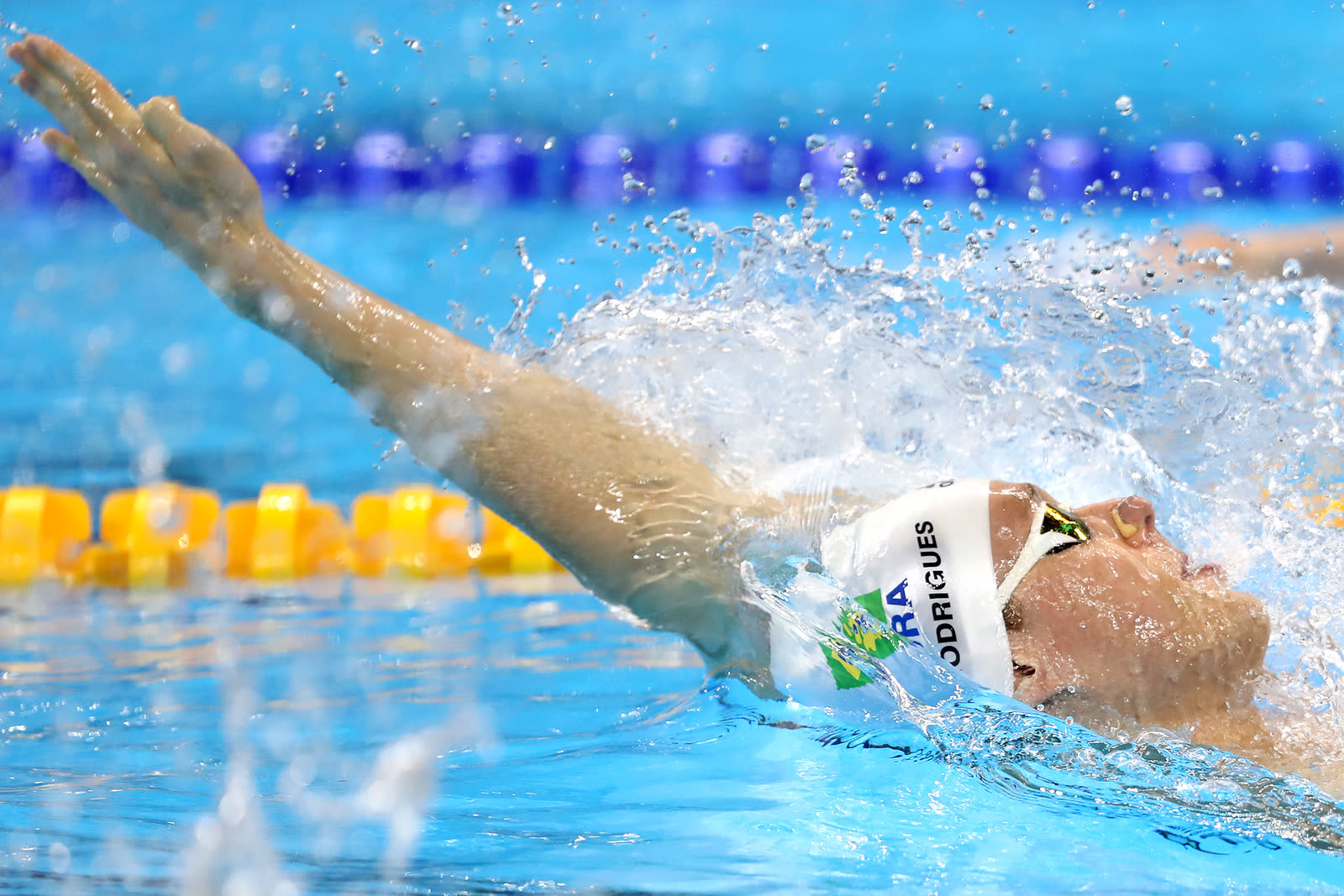
What are the best swim drills for body position?
The best ones take something away from you. Every drill below removes a prop, a pull or a breath, so the water is the only thing holding you up and your body has to arrange itself to stay long.
Keep each piece short. Body position is a balance skill, and balance is learned fresh and lost tired.
- Push off and hold the line. Leave the wall in a tight streamline, no kick, and hold until you glide to a stop. This is the position you are trying to protect all the way down the pool, and the cheapest way to feel where your legs sit. More on getting the wall part right in streamline and push off from the wall.
- Streamline kick on your back. Hands stacked overhead, eyes up, small kick from the hips. Your hips should sit at the surface and your knees should stay under it. If your hips sag here, your core is the missing link, not your legs.
- Head lead side kick. On your side, both arms at your sides, lower ear in the water, one shoulder dry. No arm out front to lean on, so you balance on your chest and ribs. This is the hardest drill here and the one that teaches the most.
- Hand lead side kick. The same position with the bottom arm extended under your head. Easier to hold, and now you can feel the difference between a long side and a bent one.
- Six kick switch. Six kicks on one side, one stroke, six kicks on the other side. It joins your balance to your rotation, which is where body position goes to die in real swimming. The rotation itself is in how to rotate in freestyle swimming.
- Board kick with the chest pressed down. If you use a board, keep your face in the water between breaths and press your chest into the water so the hips come up. Used the usual way, with the chin up and chest propped, a board lets you practise the exact position you are trying to lose. The details are in kickboard technique.
Why do drills work better than kicking harder for sinking legs?
Because low legs are a balance problem and kicking is a propulsion tool, so kicking harder treats the symptom and makes the cause worse. Kick bigger from a low position and you add effort to a shape that is already expensive.
Your lungs are a float in your chest and your legs are dense muscle and bone, so your body sits in the water like a seesaw with everything light at one end. Kicking does not change that distribution. Leaning a little weight forward onto your chest, with your head neutral, does: the water pushes back at the front and the hips rise at the back.
That is why these drills ask you to balance rather than to work. Once the shape is right, the kick can do its real job.
How do you know if a body position drill actually worked?
You check your waterline, not your watch. There is no mirror in the pool, so use the three things you can feel and see.
The first is where the water sits on your head. If the surface crosses the crown of your head and your eyes point at the bottom of the pool, your line is probably good. If the water is at your forehead or your goggles, your head is up and your legs are paying for it. That one is covered properly in head position in freestyle.
The second is whether your heels break the surface on their own. Not splashing clear of it, just brushing it, without you trying to kick higher.
The third is your stroke count. Better body position almost always shows up as fewer strokes at the same effort before it shows up as a faster time, because you get more distance from the same pull.
How long should you spend on body position drills?
Less time than you think, and more often than you think. Ten minutes at the start of a swim, while you are fresh, beats thirty minutes added at the end when you are tired and your position has already fallen apart.
Four lengths of side kicking at the front of every session for a month beats one long drill session a week. Balance is a habit your nervous system has to overwrite, and the old habit has thousands of lengths behind it.
Which mistakes make body position drills useless?
Holding your breath, and treating the drill as something to survive. Both show up constantly and both cancel the work.
Holding air creates tension through your chest and neck, and a tense swimmer cannot lean on the water. You also breathe late and hurriedly, which lifts the head and drops the hips. Breathe out steadily into the water the whole time, even in a drill where you barely move.
The other mistake is rushing. If you kick a drill hard to get to the other end, you will hold whatever position lets you kick hard, which is usually the wrong one. Go slowly enough that you could stop and start again at any point.
How can you get your own body position checked today?
You can tell SwimRead Club what feels wrong in your own words and get your number one fix free. You describe the problem the way you would say it to a friend at the pool, for any stroke, then it puts a couple of yes or no questions to you to make sure the right thing is being fixed. Your first fix is free, no card needed.
What comes back is what is happening, why it costs you, how to check it on your next swim, and the feeling to look for. That last part matters more with body position than almost anywhere else, because a correct line feels like swimming downhill and most people assume that feeling means they are doing it wrong.
Membership is $9.99 a month and adds what to do and what it should feel like so the fix sticks, a 4-week plan that fits into the swimming you already do, your next fix once the current one holds, and a library of over 200 fixes and 150 drills across all four strokes, starts and turns. The SwimRead app itself is not out yet, and you can leave your email to hear when it is ready.
If your legs have been sinking for years and drills have not moved them, take the 60-second swim check.