
I raced sixteen years in a pool with a black line under me, a wall every 50 meters, and a lane rope on each side. None of that exists in open water, and the swimmers who come to me struggling with the switch are almost never struggling with fitness. They are struggling with everything the pool used to do for them automatically: keeping them straight, telling them where the wall is, and giving them still, clear water to look through. Here is the honest list of what actually changes, and what to do about each piece before race morning, not during it.
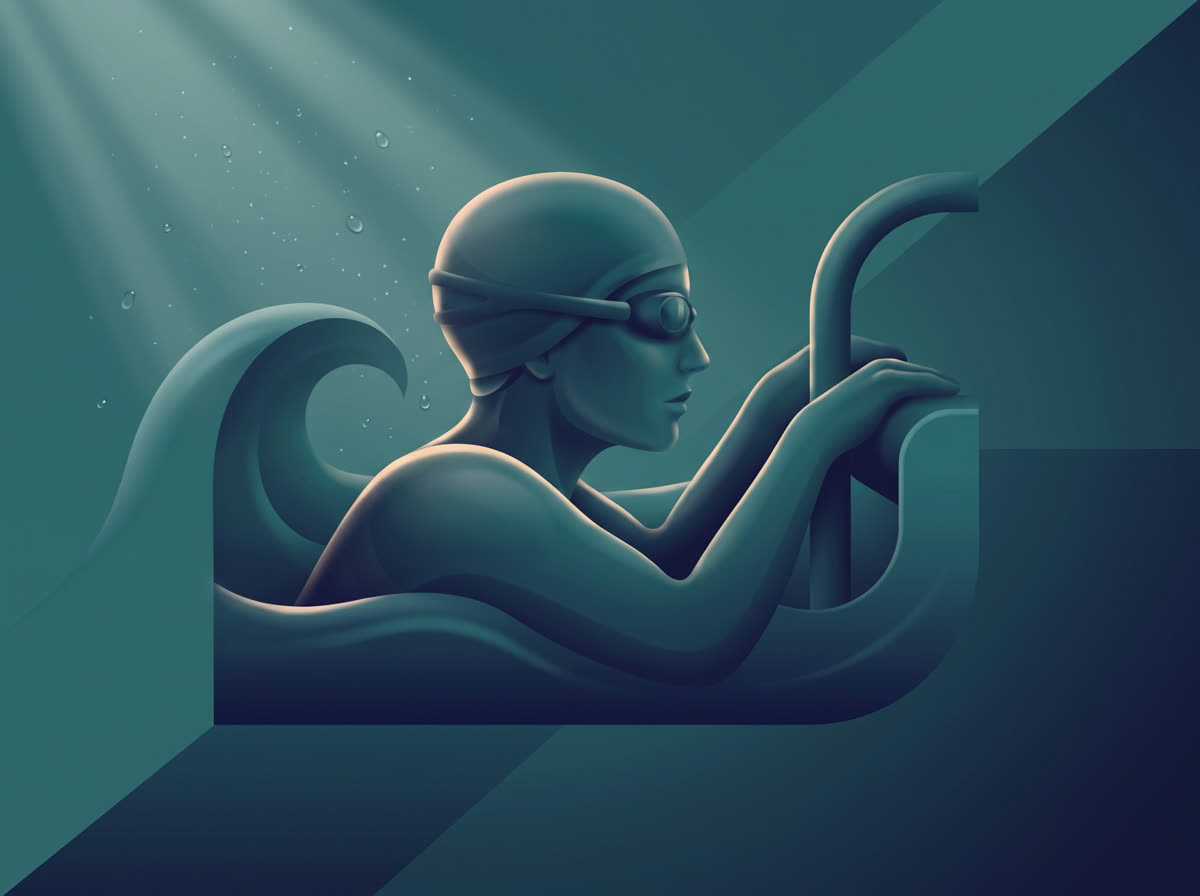
What actually changes in the pool to open water swimming transition?
Four things change at once, and none of them are about how fit you are. You lose your navigation reference, you lose your visibility, your buoyancy and body position shift if you add a wetsuit, and you go from swimming mostly alone in your own lane to swimming inside a crowd. Each one has a specific fix, and trying to solve all four for the first time on race day is exactly why open water swims feel so much harder than pool swims at the same pace.
How do you find your way without a black line?
You replace it with sighting, a skill the pool never asks you to build because the pool builds it into the lane for you. Sighting means lifting your eyes just above the surface to spot a buoy or landmark, then getting your head back down before your stroke breaks shape. I wrote a full guide to when and how often to sight in open water sighting without breaking your stroke, including the drills that let you rehearse it in a pool before you ever need it in a lake or the ocean. Do not wait until your first open water session to try this for the first time. Practice it dry, then in the shallow end, then on an easy pool set.
What do you do about not being able to see the bottom?
You expect the disorientation instead of being surprised by it, because murky or dark water is unsettling but not dangerous. A pool gives you a visible black line and a bright bottom the whole way down. Open water gives you neither, and the sudden loss of visual reference is a real trigger for the panic response some swimmers feel in their first few open water sessions. I laid out a full protocol for that reaction, including cold shock, in how to get over fear of open water swimming. The short version is that your body can learn to treat murky water as normal water, but only through repeated, short, calm exposure, not through gritting your teeth once and hoping it sticks.
Do you need a wetsuit for open water swimming?
Sometimes, and it depends on the water temperature and your race's own rules, not on how the water feels to your hand. A wetsuit also changes your body position by lifting your hips and legs, which is a different sensation from anything you feel in a pool with a pull buoy. Before you buy or borrow one, check whether your race allows or requires a wetsuit at the expected water temperature with my free wetsuit calculator, then swim in it at least once in a pool so the chest compression and buoyancy are familiar before you take it into open water.
How does swimming near other people change your stroke?
Mass starts put you inside arm's reach of other swimmers, which never happens in a pool lane, so your stroke needs to tolerate contact without falling apart. Expect to get bumped, kicked, and swum over in the first few hundred meters of a crowded start, and plan your position accordingly rather than being surprised by it. Starting toward the back or the outside edge of the pack costs you a little time but buys you clean water, which is a fair trade for a first open water race. Your stroke itself does not need to change for this, but your sighting frequency should go up near buoys and turns, where the crowd bunches up and drifting off line costs the most.
What is the best way to practice this transition before race day?
In layers, adding one open water variable at a time instead of all of them at once on race morning. A practical order that works for most beginners:
- Practice sighting on dry land, then in the shallow end of a pool, until lifting your eyes barely breaks your rhythm.
- Do one pool set with your eyes closed for short stretches, to get used to swimming without a clear visual line.
- Swim your first open water session in calm, clear water with a buddy or a safety swimmer, short and unhurried.
- Add a wetsuit to a pool swim before you add it to an open water swim, so two new sensations do not arrive at once.
- Only after those sessions feel routine, practice in a small group to get used to contact before your first crowded start.
Each layer removes one unknown, so by the time you stack all of them on race day, none of them are actually new.
Outside the current supported analysis: open-water conditions. SwimRead is a swimming video review app, currently in beta. It supports short, side-view freestyle recordings, shows which automatic measurements are available, and keeps a history and chosen training focus for each swimmer. It does not grade technique or establish that a specific error was detected. Video stays on the phone; technical measurements and body-landmark coordinates are sent as described in the Privacy Policy. Join the beta waitlist for an invitation as places open.